‘It’s Unrecognisable’: How Being a Tax Haven Has Changed Jersey
On a late Friday afternoon on the Channel Island of Jersey, tourists and locals are flocking to St Helier’s waterfront where the town’s sprawling beach has emerged at low tide.
In one direction, they face the calm waters of St Aubin’s Bay, ringed by a seaside promenade and punctuated with a tidal island hosting the 16th century Elizabeth Castle.
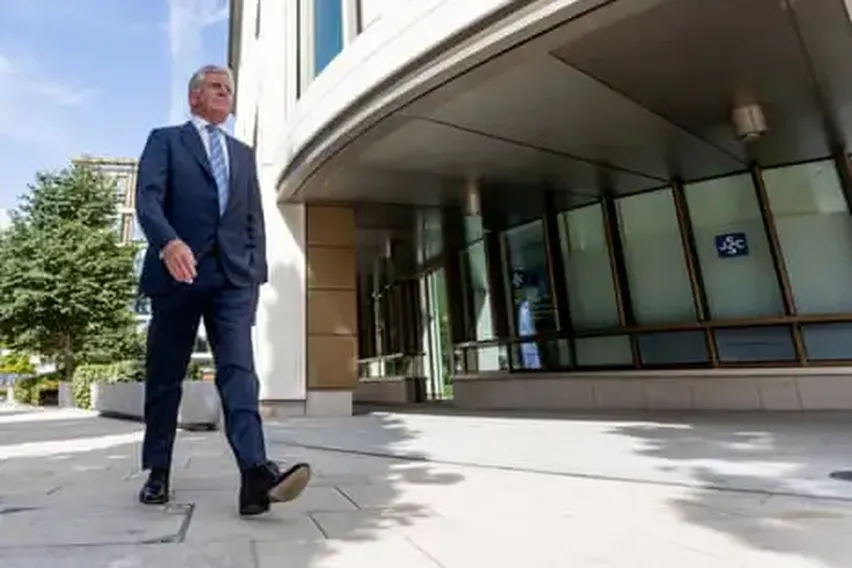
Back on shore, however, it is all business. Gleaming glass buildings hosting global accountancy firms and and international banks hint at the £4bn offshore finance industry dominating this nine-by-five-mile island’s economy.
For decades, low taxes and corporate secrecy have lured the wealth of global billionaires and multinational companies to Jersey’s shores, requiring a high-paid cadre of bankers, accountants and lawyers who now make up more than half of the island’s economic output, and two in every five jobs.
It has also made Jersey one of the world’s richest economies, giving its 104,500 population a GDP per head that is nearly 60% higher than the UK.
But those tactics have come at a cost, not least to Jersey’s international reputation, with the island consistently securing a top-10 slot in the Tax Justice Network’s international tax haven rankings. It also came under fire after the Panama and Paradise papers data leaks, which shone a light on how elites were hiding wealth in offshore hubs such as Jersey.
But Jersey isn’t the only place chasing global wealth, and foreign governments that have built on and replicated the island’s model are now threatening to eat its lunch.
“Without urgent intervention, Jersey’s future success as a financial centre is at risk, with inevitable repercussions for the Jersey way of life,” a government-backed review, led by NatWest Group’s former chair Howard Davies, warned in March.
In response, Jersey’s government is charging ahead with a £31m four-year plan aimed at slashing red tape, boosting the British crown dependency’s global profile and diversifying into popular crypto assets, all to keep it relevant in a rapidly changing world. “The risk of complacency is real,” the report warns. “Standing still means falling behind.”
This is not the first time Jersey has faced an economic crossroads.
Its boom and bust history stretches back to the 1700s, when it was home to a lucrative fine knitting industry. Once knitting was killed off by machines, oyster catching and shipbuilding took over, until overfishing and steam power closed shipyards.
Entrepreneurial farmers then discovered and bred new exports: the docile and milk-rich Jersey cow, followed by a blight-resistant potato that still bears the island’s name, requiring a swathe of migrant workers to support farmers. “The cycle of Jersey’s industries has tended to see everyone getting involved where there’s a lot of money to be made,” says Lucy Layton, outreach curator at Jersey Heritage.
A century later, as postwar Jersey tried to recover from Nazi occupation, tourism boomed, aided by the popularity of the Bergerac detective series. That industry was eventually ruined by discount airlines offering cheap holidays to sunnier European destinations, ushering in a new economic era focused on billionaires and corporations looking for a low-tax home for their wealth.
Jersey has crafted an alluring package to draw in global wealth, involving zero inheritance or capital gains tax, and no corporation tax – outside of financial services firms, which are charged just 10% on their earnings. Meanwhile, an army of high-earning bankers, lawyers and accountants face a maximum of 20% income tax on the island, compared with 45% in London.
But wealthy Britons have been choosing the glass towers of Dubai over Jersey’s low-rise seaside towns, while rich families overseas are hedging their bets and spreading cash across a number of offshore hubs.
The Panama and Paradise papers data leaks have also influenced money flows. “People now are much more selective about the jurisdictions that they deal with,” says Joe Moynihan, chief executive of the sector’s promotional body, Jersey Finance. “They don’t want their organisation, or indeed their family, to be associated with a jurisdiction that could potentially damage their reputation.”
However, Moynihan says Jersey’s reputation is strong: “We’re well regulated, with plenty of expertise, good legislation and an independent judiciary, which is becoming increasingly important in the crazy world that we live in.”
But Jersey is still losing ground. Authorities say they need to regain a competitive edge, including by diversifying into crypto assets – such as stablecoins and tokens – to draw a younger wealthy client. Ian Gorst, the island’s finance minister, says it is also looking to cut back on “regulatory friction”.
To some, that may sound like an opportunity to cut corners, but Gorst insists this is not about watering down rules meant to stop financial crime, corruption or sanctions evasion. Jersey’s ongoing battle with the Russian oligarch Roman Abramovich over his frozen assets is a case in point, he says. “What I think it shows is that Jersey can stand alongside the UK in fighting these issues.”
Cooperation with the UK, though, only goes so far. Gorst has so far resisted pressure from Westminster’s anti-corruption champion Margaret Hodge to publicly release its beneficial ownership register, showing who ultimately owns Jersey-based companies. “I don’t intend to make our register public, and I’ve been clear to the UK about that,” he says.
But not everyone is on board with the government’s finance-first agenda.
Laura Craig, the owner of the Little Wren gift shop in St Helier, has lived in Jersey for 45 years. “For me personally, I would like to see Jersey have more of a balance in industry,” she says, including a return to more tourism.
St Helier itself has changed over Craig’s lifetime, with the old granite-frontage that once dominated the town’s waterfront having been reclaimed and built up for the finance industry. “It’s unrecognisable to when I was a little girl,” Craig adds. “All the big buildings on there now are banks and finance houses.”
Many say the influx of wealthy bankers has pushed up house prices across the tiny island, just 14 miles off the coast of France. “They just increase the cost of living for everybody,” says Antonio De’Lemos, co-owner of the La Topaze D’or antiques shop in St Helier market.
He fears Jersey’s reputation has also taken a blow. “I don’t like to be in Jersey, knowing this is a tax paradise. And let’s be honest, it is,” he says. However, he acknowledges that it has become taboo to criticise the sector. “The establishment don’t like when you speak up.”
While Jersey’s authorities are panicked about losing billionaires to Singapore and Dubai, many islanders are struggling to make ends meet. The number of food bank users tripled in the three years to 2024, and demand has continued.
Just streets away from St Helier’s financial district, Vini Jones, the general manager of the Grace Trust charity, is helping prepare a free weekly meal at St Paul’s Church for dozens of locals. “You can move here, you can get a job, you could send your kids to school, you can go to your office at the weekends, you go to the beach, and you can have absolutely no idea or concept of what it’s actually like for a lot of people who live in Jersey,” he says.
Jones, who moved to Jersey from London in 2000, doesn’t blame the finance industry, which he says helps fund the charity’s work. If the finance sector took a blow “it would be a bit of an earthquake but I think that people can get pretty resourceful”, he says. “We may see a little bit less coming our way in donations if that was the case, but I think there’s still a good community spirit in Jersey that people will rise to.”
That community spirit is palpable across the island, including in Gorey, a 15-minute drive up the coast from St Helier. There, 76-year-old Liz Viney is manning a ticket table at the Saturday car boot sale. She says that while some islanders would like to see the bankers go, it would be more painful than they expect.
“There’s a large part of the community here who would be quite pleased to revert back to being agricultural and fisheries and everything. But I don’t think we can go back there … who would support [the economy]? Who would pay the taxes? I think we have to live the life that, well, God gives us. And at the moment we are paid by the finance community. That’s what keeps us going.”